


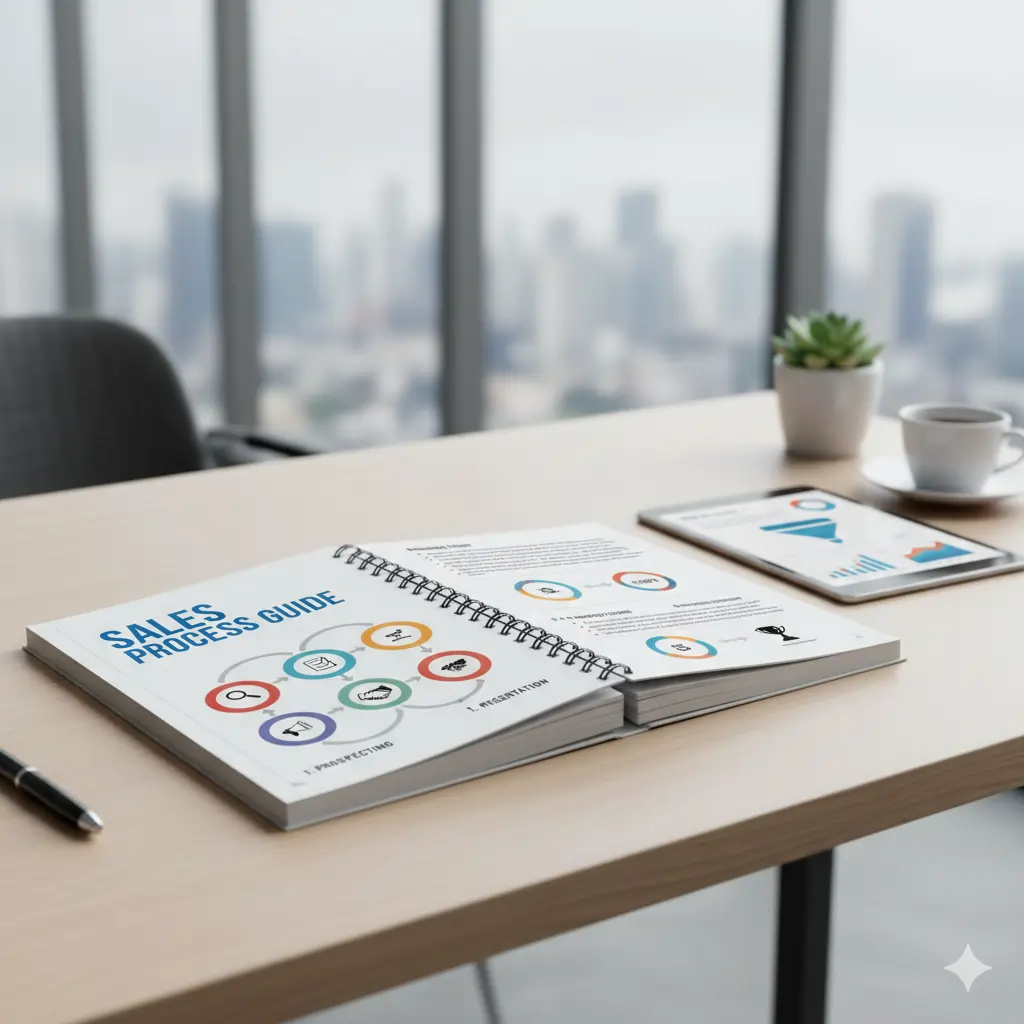
A comprehensive sales process guide should be more than just a list of steps. It should include the following core elements:
1. Prospecting
This is the foundational stage where you identify and qualify potential customers. Your guide should outline:
Ideal Customer Profile (ICP): Define who your perfect customer is based on industry, company size, revenue, and other key characteristics.
Lead Generation Strategies: Detail the methods your team should use to find leads, such as cold calling, email outreach, social selling on platforms like LinkedIn, networking, or inbound marketing.
Qualification Criteria: Establish clear criteria (often called BANT: Budget, Authority, Need, and Timeline) to determine if a lead is a good fit before investing more time.
2. Initial Contact & Discovery
This stage is about making a strong first impression and gathering crucial information. The guide should cover:
Opening Lines: Provide scripts or templates for calls and emails that grab the prospect’s attention and show immediate value.
Effective Questioning: List a series of discovery questions designed to uncover the prospect’s pain points, goals, and challenges.
Active Listening: Emphasize the importance of listening more than talking to truly understand the prospect’s needs.
3. Presentation & Solution
Once you understand the prospect’s needs, you can present your solution as the answer. Your guide should detail:
Customization: Advise the sales team to tailor the presentation to the specific needs of the prospect, rather than using a generic pitch.
Demonstration (if applicable): Provide a framework for a product demo that focuses on solving the prospect’s identified problems.
Handling Objections: List common objections (e.g., “It’s too expensive,” “We’re happy with our current provider”) and provide effective, practiced responses.
4. Negotiation & Closing
This is the final push to seal the deal. The guide should include:
Pricing Strategy: A clear outline of pricing models and any available discounts.
Negotiation Tactics: Tips on how to negotiate win-win agreements and avoid giving away too much.
Closing Techniques: Provide a few closing statements or questions that prompt the prospect to commit.
5. Post-Sale & Follow-Up
The sales process doesn’t end with a signature. This final stage is crucial for customer retention and future business. Your guide should emphasize:
Onboarding and Hand-off: Instructions on how to smoothly transition the new customer to the support or account management team.
Follow-up Cadence: A plan for checking in with the customer to ensure they are satisfied and to look for upsell or referral opportunities.